Starlink on a boat: how to get internet anywhere you point the bow
Marina wifi dies at the fuel dock. Starlink is the first kit that made working from a boat a real sentence. Here is how far anywhere actually goes, what to mount, and which plan to buy.
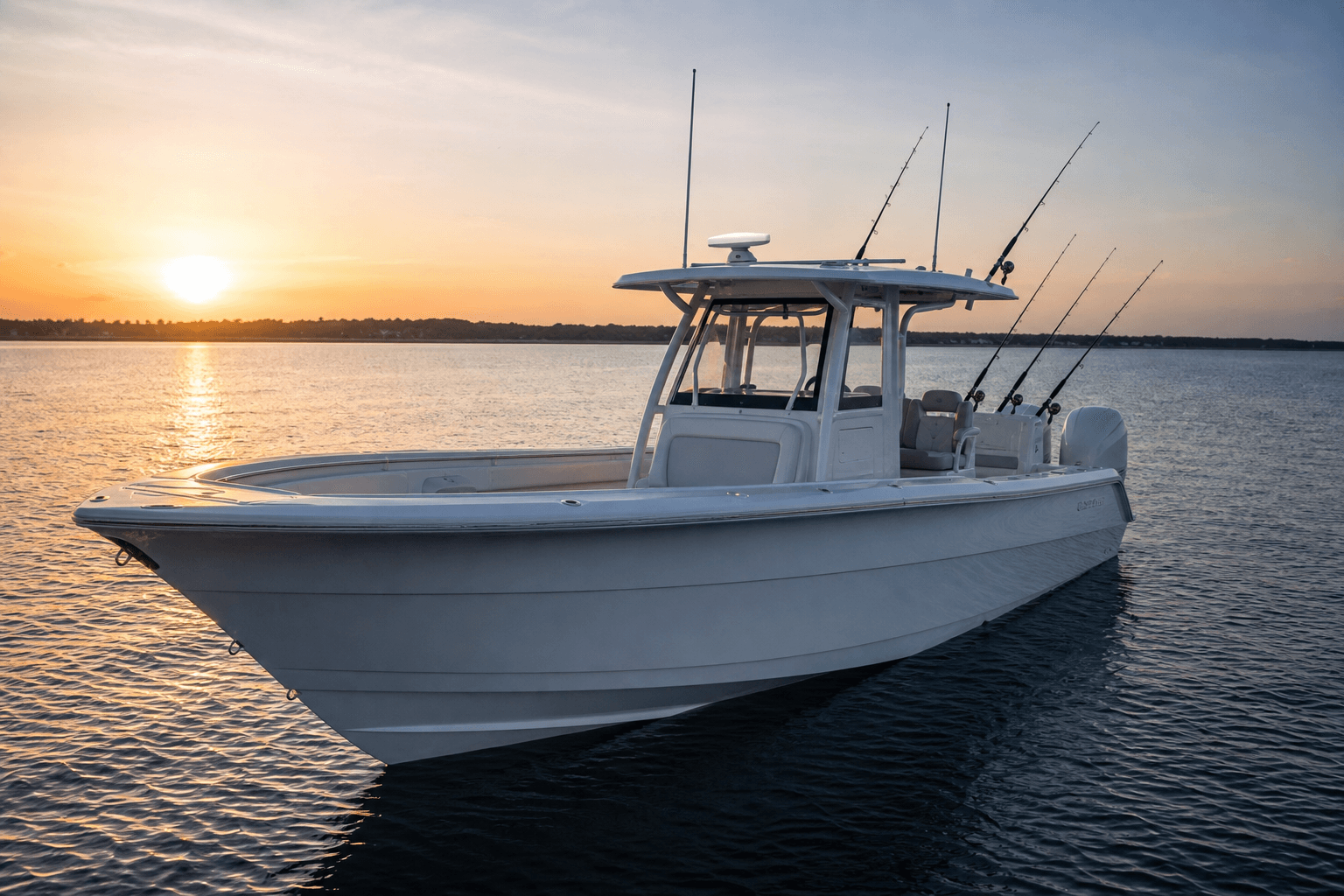
Marina wifi dies at the fuel dock. Cellular is a bar and a half until it is none. Starlink is the first kit that made "I will just work from the boat" a real sentence, not a joke you tell after you burn a day of hotspot data.
It is not magic, and it is not literally everywhere. It is a small dish, a clear view of the sky, and a plan that matches how you actually use the boat. Get those three right and you can run charts, send a haul-out photo, pay a yard invoice, and FaceTime from a mooring that used to be a dead zone.
Starlink's own boating page is here: starlink.com/boating. Kits, plans, and the fine print change. Read that before you click buy.
What you are actually buying
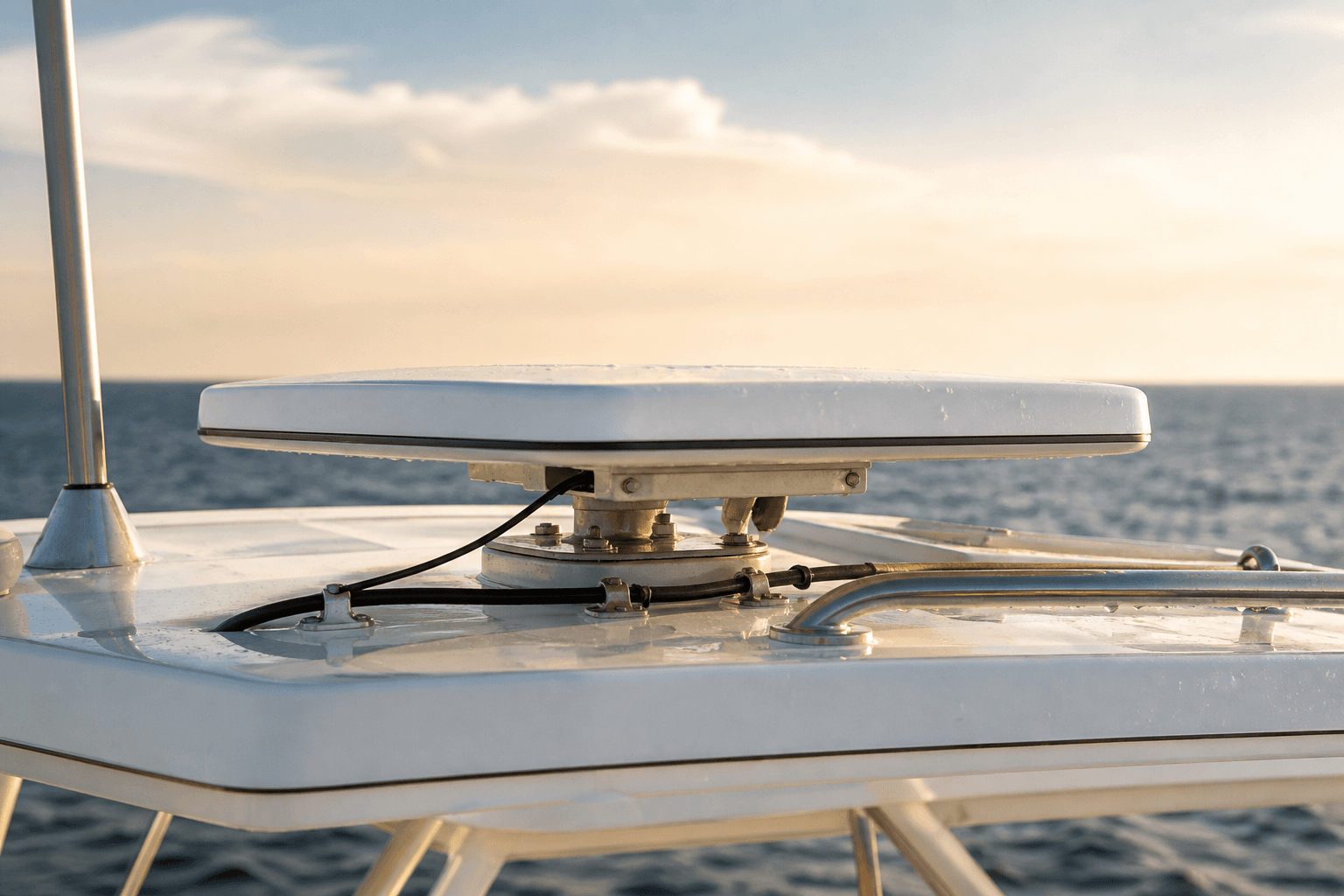
A Starlink kit is an antenna, a router, and a cable. On a boat the antenna wants a flat, solid mount with a view of the sky that is not under a radar arch, a bimini full of metal, or the neighbor's flybridge.
In-motion use is not automatic. Starlink designates specific kits and mounts for vehicles and vessels. A home dish lashed to a T-top with zip ties is how you void a warranty and, on a bad day, put a white square into someone else's cockpit. Use the mount they sell for boats, on a surface that will still be there in a seaway.
Power is the other half. These kits want clean 12V or inverter AC, not a dying house bank and a cheap cigarette-lighter adapter. Budget for the draw when you size solar and the battery. If the boat already struggles to keep a fridge cold overnight, add the dish last.
"Anywhere" has a coastline
Marketing says anywhere. The useful version is this:
- Marinas, bays, rivers, and coastal water are the easy win. Roam-style service is built for territorial and inland waterways, including in-motion use in the countries that allow it.
- Past about 12 nautical miles you are in a different product. Open-ocean coverage is an add-on or a maritime plan, not a silent extra on a land kit.
- A month-long cruise through other countries is not the same as a Saturday on your home bay. Some roam plans want you home on a clock. If you live on the boat, read the travel rules before you cast off.
If you day-boat and sleep at a marina, a roam plan is usually the honest fit. If you hop countries for months, or you run offshore overnight, look at the maritime side of the shop instead of hoping the coastal plan pretends to be a ship terminal.
Prices move. Hardware SKUs move. Do not copy a forum post from last spring. Starlink's boating page is the current list.
Mount it like you mean to keep it
Pick the highest solid horizontal you have that still sees sky. Hardtop and arch are the usual answers. Canvas is not a mount.
Keep it off the radar beam and away from VHF and GPS antennas as much as the boat allows. A dish that works at the dock and drops every time you put it in gear is almost always a blocked sky or a mount that flexes.
Run the cable like you run every other wet-deck cable: drip loop, chafe protection, a gland that does not leak into the headliner. Label both ends. The next owner, or you in February, will not remember which white cable is the internet.
Do a dock test with the engine off, then with it idling, then underway in a straight line. If it only works tied up, it is not a boat install yet.
What it is good for, and what it is not
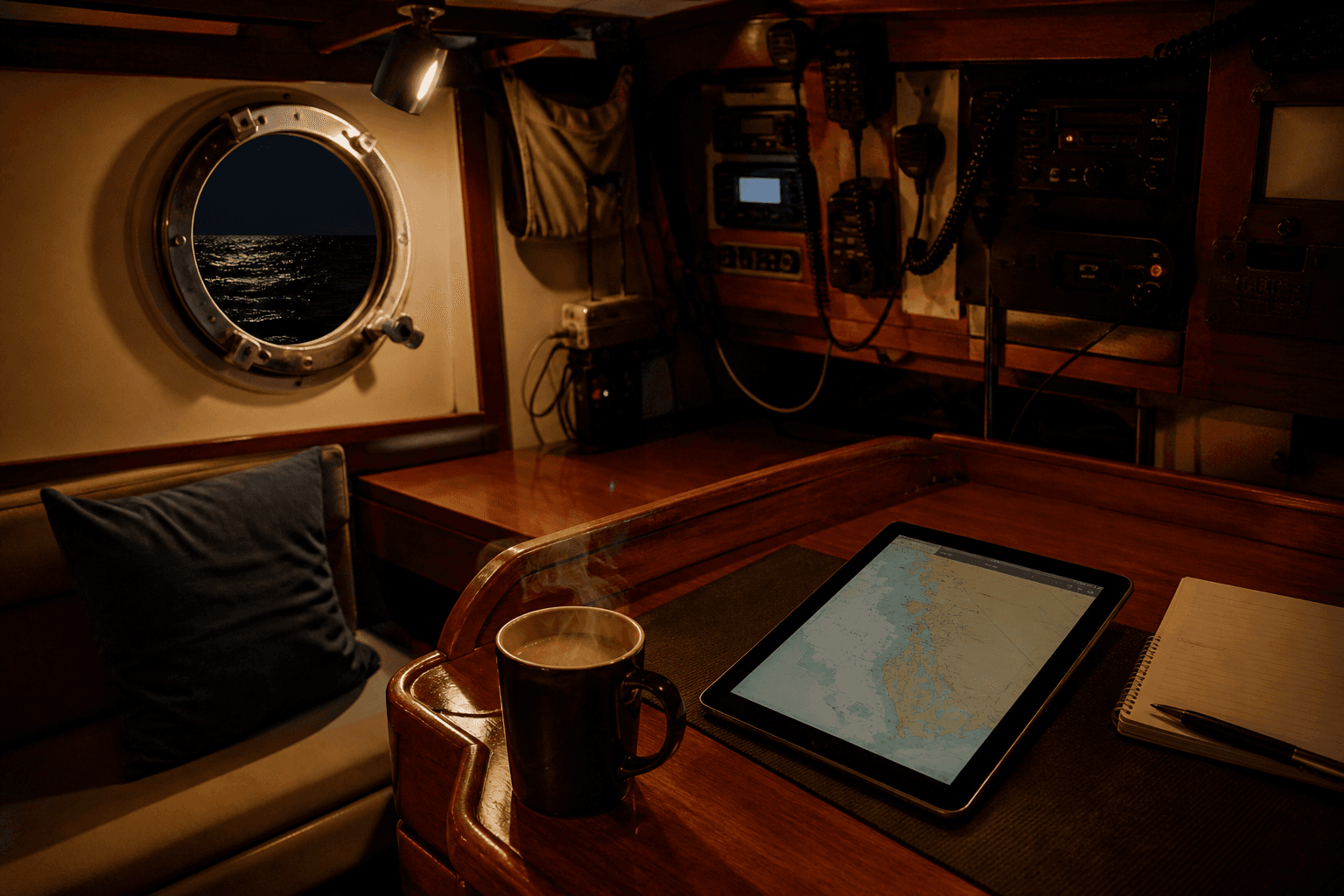
Good: weather that is not six hours stale. Chart updates. A real video call with a surveyor. Uploading listing photos from the slip instead of driving home to wifi. Paying the yard. Letting someone on shore see you are actually where you said you would be.
Bad: assuming it replaces a VHF, an EPIRB, or a paper chart. Assuming it works under a steel hardtop, in a shipping channel with a huge blind sector, or through a plan you never turned on for ocean coverage. Assuming "unlimited" means you should 4K-stream three cabins across the Gulf.
If you are shopping for a boat that already has a dish on the roof, treat it like any other gear: ask which kit, which plan, whether it is legal in-motion, and whether the mount is through-bolted. A pretty white square in a listing photo is not a sea trial.
Buy the kit, then go use the boat
Order from Starlink for boating. Mount it properly. Pick the plan that matches coastal days versus real offshore nights. Then go somewhere the old hotspot used to die, and see if the forecast still loads.
That is the whole product. The rest is a sky view and a battery that can feed it.